Mortgage Refinance Solutions Home Loan Repayment Calculator
Calculate home loan repayments with our Home Loan Repayment Calculator. View detailed amortization charts, compare loan terms, and plan your mortgage with confidence.
Calculator results are estimates based on the inputs and assumptions used and are for general information only. They are not quotes, offers, loan approvals, eligibility decisions or personalised recommendations, and do not indicate that a lender will provide credit. Actual costs and repayments may differ.
Home Loan Details:
Important!
Home Loan Interest Rates differ from lender to lender and will depend on your individual circumstances (credit history, employment status, age, etc.).
Home Loan Amortisation Calculator
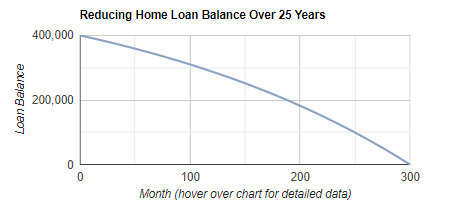
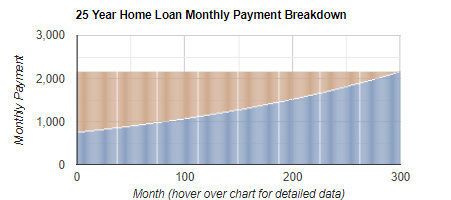
The following amortisation graphs detail month-by-month data on the progress of the proposed loan. The first chart below examines the reducing loan balance over the course of the finance contract term. The second graph illustrates the portion of each monthly repayment allocated to payment of interest vs principal reduction.
How to use our Home Loan Repayment Calculator
Our Home Loan Repayment Calculator helps you estimate your mortgage repayments in Australia and understand how a loan may reduce over time. It is useful for budgeting, comparing loan terms, and visualising an amortisation schedule (how each repayment is split between interest and principal). The calculator is designed for planning only and works best when you enter realistic assumptions.
Important information: Results are estimates only and do not constitute a quote. Interest rates and loan features vary by lender and may change. This information is general and does not take into account your objectives, financial situation or needs. Consider whether it is appropriate for you and seek professional advice if required.
How to complete the calculator fields (in order):
1. Purchase Price: Enter the property purchase price. If you expect to borrow extra for costs, you may choose to include amounts such as stamp duty, insurance, and other buying costs in this figure so your estimate reflects your likely loan size. Enter whole numbers only (no dots or commas).
2. Deposit or Equity Value: Enter your cash deposit or usable equity from another property (if applicable). A higher deposit generally reduces the loan amount and can lower repayments. Enter whole numbers only (no dots or commas).
3. Term of Loan (years): Select the number of years to repay the loan. Longer terms usually reduce repayments but increase total interest paid over the life of the loan.
4. Interest Rate (% per annum): Select an interest rate for the simulation. Use a realistic rate and consider testing higher rates to understand “rate rise” risk.
5. Calculate: Click calculate to generate your results.
How to interpret the results:
1. Repayment estimate: Use this as a starting point for affordability checks, remembering real loans may include fees and different features.
2. Amortisation charts: Review the loan balance chart to see how your balance falls over time, and the interest versus principal chart to understand how early repayments are typically interest-heavy, then shift toward principal reduction later.
3. Compare scenarios: Adjust the term, deposit/equity, or interest rate and recalculate to compare loan terms and see how changes affect repayments and total interest over time.
Recent housing finance data and property market reporting point to a familiar pattern: Australian buyers are taking on larger home loans as prices recover in several markets. For mortgage holders, that matters even if they are not planning to move. A bigger lending environment can reshape lender competition, valuation outcomes and the way banks assess refinance applications. - read more
Fresh lending momentum suggests Australian mortgage holders are becoming more active again, with refinancing moving back onto the household finance agenda after a period of caution. For many borrowers, the trigger is not simply the hope of a lower advertised rate. It is the broader pressure of higher repayments, tighter budgets and the realisation that existing customers can drift away from the sharpest offers unless they take action. - read more
Australian mortgage holders are facing a familiar but important warning: staying with the same lender may be costing more than expected. Recent rate-tracking across the home loan market suggests lenders are continuing to reserve some of their sharper pricing for new borrowers, while many existing customers remain on older, higher variable rates unless they actively ask for a review or move elsewhere. - read more
Australian mortgage holders have a fresh reason to keep an eye on the refinance market, with recent movements in bond markets pointing to a more cautious outlook for interest rates. While the Reserve Bank of Australia remains the headline-maker for borrowers, lenders also watch wholesale funding costs closely, especially when setting fixed home loan rates. - read more
Australia’s housing market is known for its vibrant and ever-changing nature. Navigating through its complexities can be quite the feat for any homeowner. With property prices experiencing fluctuations, many Australians are exploring avenues to maximise their financial opportunities. - read more
Mortgage refinancing is the process of replacing your existing home loan with a new one, usually with better terms or conditions. It can provide Australian homeowners with an opportunity to reduce their monthly payments, lower interest rates, or switch to a different loan type that better suits their financial goals. - read more
If you're an Australian homeowner, you've probably noticed discussions about refinancing becoming more frequent. Recent trends in interest rates have led many to explore this financial strategy. So, what exactly is refinancing, and why is it such a hot topic right now? - read more
Refinancing your home mortgage loan has become a significant conversation topic lately, especially with the current fluctuations in interest rates across Australia. For many homeowners, these discussions come in the context of rising interest rates, which can substantially affect monthly repayments. - read more
Knowledgebase
Credit Score: A numerical expression based on a level analysis of a person's credit files, representing the creditworthiness of an individual.